Pace Yourself: Halfway Through NaNoWriMo

Whew! Where does the time go? I can’t believe we’ve already passed the halfway point of November. Are you anywhere near the midpoint of your story? I’m doing better than I’d anticipated, but I’m only about 12k (25%) into my ghostwritten novel, which isn’t the midpoint, not by a long shot. How’s your word count, are you on track for 30,000 words by the end of the day? If not, don’t let it stress you out, there’s still time!

I’m running with the NaNoRebel crowd this year, I know. While I’ve only gotten about a quarter of the way into my ghostwritten novel, I passed 30k words written in my combined projects a week ago. So I have less to concern myself with in terms of NaNo win at this point and more to worry about with just getting my ghostwriting on a regular schedule. I was aiming for 30k by the end of the month, and I might be on track? I’m not entirely sure. I think I’ll have 25k at this rate, but might need to start pushing myself a little harder to hit that 30k goal.

Pacing Yourself

It’s always wonderful to start a new project and find things falling into place. Week one of National Novel Writing Month tends to be that crazy word spree, falling into a more regular stride by week two. The worries that come with being halfway through the month, however, tend to make people push themselves harder than they should. This is not an ideal strategy for writing. (If you only write in November for the heck of it, maybe you can get away with it, maybe not.) Push too hard and you are risking burnout, not to mention making it harder on yourself if you can’t get to 50k by the end of the month. Sometimes you can push until the end of the month and then crash afterward. Most people don’t have that luxury, however, what with jobs and life being what they are. (Especially in 2020.)

I strongly recommend including rest breaks in your day, even if it’s five minutes with your feet up and your eyes closed, not thinking about anything but the found moment of peace. I’ve recommended guided meditation apps before (don’t freak out just because I used the word meditation, it’s not a big deal, really); the one I use for quick breaks is called Simply Being. I use others for longer breaks and times when I need to slow down and reduce tension, but Simply Being is great for guiding me to stop thinking about anything, novels or otherwise, and just focus on breathing deeply for a few minutes. The guided part means you don’t have to keep yourself on track, there’s a gentle voice doing it for you.

For those with health or other energy concerns, I would add that a more serious break makes a big difference, too. I include an hour-long siesta in my mid-afternoon schedule, blocking out time that is for nothing but stopping and recuperating a little. If I don’t get my siesta about six hours of work into my day, the entire rest of the day tends to crash. I can also (how do I put this politely?) be quite a witch without that rest. Or, on the days I take my siesta as planned, I have recovered enough to turn my brain back on and write steadily for several more hours, or whatever tasks I have left in my day.

Every word brings you one step closer to the finish line.
You can do it!
~Anonymous NaNoBoston pep talk

There’s a happy medium between writing frantically to reach a desired word count and taking it as it comes. Sometimes you need to reach your maximum energy for writing and stop, even if you haven’t made your desired effort or word count for that day. It’s pretty rough on your body and mind if you try to go, go, go all the time. It will build up until you get tension headaches, start sleeping less well, or other signs of physical or mental fatigue. If you ignore the first signs, even the healthiest of writers are going to start having more problems. Sometimes these problems include the foul mood that makes you offend someone when you didn’t mean to, finding everything anyone says hurts as if it were a personal attack, clumsiness that makes you repeatedly trip and fall, and the problems tend to escalate quickly.

Do not push yourself so hard you injure yourself!

The downside of pacing yourself can be that you don’t reach fifty thousand words in thirty days. It’s hard to accept for a lot of people, but this year of all years, it’s time to admit that there are things going on that can take precedence over an online challenge of writing 50k in 30 days. Whether it’s health, happiness, family, or something else entirely, if you don’t make it to 50,000 words, do not be hard on yourself! You wrote, and that’s more than you’d done prior. Starting is often the first hurdle a writer faces, and you’ve accomplished that! There’s no blank page cursing you now. If you don’t ever finish the story you started this month, that’s okay, too. I would encourage everyone to try and finish their stories, but at a more relaxed pace. The winter is going to feel long and hard this year, so having a different world to escape to can be one of many ways to make it seem easier.

Maybe it’s time to stop for a moment and consider. What worked well for you the last couple weeks? Does having a daily goal help or hinder you? Perhaps setting a weekly goal is easier, so you have a little bit more leeway to write more some days than others? Did you set a scheduled time to write each day, and that worked well? What about a group of writers you got along well with that helped keep you on course? (Surprise, you can make writing groups outside of NaNoWriMo, too.)

Your Task, Should You Choose To Accept It…

Make a list of things that worked well for you this month. Whether it’s setting interval goals, keeping in touch with certain people, or a list of favorite foods/meals that you used as rewards when you successfully wrote your required words that week. At the beginning of the month I talked about Carrot and Stick motivation; see if you can list five successful positive and negative motivational tools that actually worked for you in the last couple weeks. Brainstorm more, if you like, but keeping the focus on what you have proven works can help a good deal. How might you be able to build those proven methods into your life for the coming weeks (and months beyond)?


I told a writer today that the best defense against negative critique is to not let it stop you and to write some awesome words that you know are good. Whether the critique is from someone else or just that little voice in the back of your head that says you’ll never make it, fight the negativity. November is getting darker (for those of us in the Northern Hemisphere), but it is a choice to accept the negative thoughts that come with it. Even if the best move is just to realize when you’re being self-defeating and move on, it’s the forward movement that’s the key.

You can do this!

Cheers,
~Marie

The Problem with Cliffhangers

It’s not a huge problem, so if you’ve already gathered your torches and pitchforks, you can put them away again. My problem with cliffhangers is that most people don’t know how to define cliffhanger, and so they end up cutting off a book mid-scene, with no plot arc at all.

Guess what. That’s not a cliffhanger, that’s called not finishing your book.

A cliffhanger or cliffhanger ending is a plot device in fiction which features a main character in a precarious or difficult dilemma or confronted with a shocking revelation at the end of an episode of serialized fiction.

Wikipedia

In this case, ‘serialized fiction’ means any series, whether it’s just going to have a sequel or eight more and counting. Notice that this definition says ‘in a difficult dilemma or confronted with a shocking revelation’, not “incomplete story line”. This is a big difference, and I feel like many writers nowadays miss that. If you’re not sure you understand what I’m getting at, this blog is for you.

If you don’t like cliffhangers either, the information below may be superfluous for you, but it’s also helpful to know, whether you’re currently writing a series or not.

Writing A Series

In a series, there is usually one over-arching plot or conflict, whether it’s the Star Wars rebels versus the Empire or the Game of Thrones’ ongoing fight against the Winter. This series plot does not end at the end of book one, no. That is the cliffhanger, where you leave that metaplot hanging, usually in as dramatic a fashion as possible.

Note, however, that each book in a series has its own plot; a series has subplots that work together to build the primary plot. Do I need to say that again? Each book in a series has its own plot. Beginning, middle, and end.

In the Star Wars example, the series plot is rebels vs evil empire, but the chronologically-first movie, A New Hope, is all about the Death Star, and they win that battle; the Death Star is destroyed. First movie plot follows the hero’s journey of Luke Skywalker as he is thrust into the universe instead of his tiny farm, and he gets to grow, despair, and triumph just like a hero of a stand-alone movie. How about a TV series? Pick your favorite show and it’s pretty easy to see there’s an episode plot that is for just that episode while it still ties into the bigger plot(s) of the season and series. We expect an episode, a movie, or a book to have a complete arc, even if there’s more going on that hasn’t been resolved yet. (Incidentally, this is what irritated me most about The Hobbit movies, that’s one book’s plot arc, not three movies’.)

This is a critical part of writing a book your fans are going to love. If you don’t write book one solidly enough to make them come back for more, thinking about the series isn’t going to do you any good. Having book one end in a cliffhanger that they can’t answer without paying for another book may hold a few, I will give you that, but will likely piss off a lot more.

If you’re thinking about writing a series, you might want to consider whether your genre and plot is worthy of an entire series (https://writersedit.com/fiction-writing/ultimate-guide-how-to-write-a-series/#Should-I-write-a-series). Is your plot one arc? Probably a standalone book. Are there months or years to cover, or is it all a week or two, or even a day or two? There’s a lot to consider, and writing a series is not all about making money, it requires a complex plot developing across many books to accomplish the end goal.

Fantasy, science fiction, crime or mystery, historical fiction, and often children’s or young adult books are well-suited to being serialized. Often times the larger plot breaks down into smaller plot arcs that can be broken up into incremental progress, whether the characters are on an epic fantasy quest to save the world or solving a mystery only to discover there’s something underhanded going on that will require more investigation. Romance novels are usually standalone books. Why? How many times can you break up and get the main characters back together? It’s true, there are “series” of romance novels, but they tend to be related books, not the same couple of main characters. Some are set in the same place and tangentially related that way, others have connections between characters. But this isn’t quite a series in the same way that Game of Thrones is, with the same plot being carried over from book to book, there’s no larger plot going on from one book to the next.

If your genre and plot are conducive to writing a series, consider your characters. For any widely popular or bestselling series, the characters are what keep the readers coming back. Those characters have to evolve in each book, not just over the entire plot arc. If your characters require the entire plot arc to develop, you’re probably thinking about a single book’s plot, not a series. You must have significant character development in each and every book.

Lastly, consider the effort that goes into writing a single book. Are you prepared to actually do that, several times over? I don’t just mean you think you can handle it. Do you have enough savings that you can actually spend the time it takes without going broke? If you have a job, how many hours devoted to writing do you have every week? You’re looking at a serious commitment of time, energy, funds, and motivation. If you start a series and fail to complete it, do you really expect any of your readers to pick up anything else you write? Ever? Can you realistically commit to writing the entire series? (The key word there is realistically!)

Under-Appreciated Happily Ever After

I can’t say that more strongly. It seems as though no one appreciates the value of a solid happily ever after (HEA) ending nowadays. Just because someone can make big bucks writing a series of books doesn’t mean it’s easy to do or, perhaps more importantly, that they were writing a series for the money it would make them. (If your writing is focused solely on the money you could make, you’re in the wrong business.)

I will admit that it’s customary to write fantasy series more often than standalone novels. The same goes for science fiction or crime/mystery novels. The expectation is often a series, and every writer must consider what their audience is expecting. Preferably before starting to write, in fact.

Even if you want to write a series, think about each book. At the end of the first Star Wars movie, they weren’t done fighting, by any means, but they’d accomplished something, certainly. Try and think about how you can give your characters a happy ending, even if they’re only able to celebrate for a little while before they must tackle the next step in their journey. It is by no means necessary to wrench your readers sideways right at the end of the book just to hold their attention. If you can’t hold your readers’ attention, you’ve got bigger problems to deal with before thinking about writing a series.

Freelancers Beware: “Each Must End in Cliffhanger” Requests

The number of requests I see for series of five or six so-called books that are only 15,000 words each, where each must end in a cliffhanger, is honestly sickening. First of all, I have short stories that are more than 15,000 words. That’s not a book, that’s at best a novella. Novellas can have series, too, don’t get me wrong, but if you want thin short stories instead of novels, have the good grace to call them such. Second, don’t offer the lowest possible payment. One cent per word is insulting for someone who can actually write a solid six-book series, regardless of the length of story.

The goal of “Each Must End in Cliffhanger” requests are a short, easy to sell series where the client (whether it’s a publisher or an author trying to hire a ghostwriter) believes they can make easy money. Frankly this is pathetic, because there is no easy money in publishing, not really. It takes huge amounts of work. Maybe fifteen-times-bestselling authors don’t need to work as hard anymore, I wouldn’t know. For everyone else, it’s going to require effort on your part.

If you, the freelancer, are going to do the kind of work it takes to write a series that sells easily and well, make triply sure you are being paid what your time is worth for it. That’s definitely more than a single cent per word. One of the reasons I see so many requests like this, in my opinion, is because a client hires someone to write their 90,000-word series only for that freelancer to realize just how much work it is to write, and that freelancer wises up… they won’t keep writing for a measly single cent per word. Suddenly the client is without a writer to exploit, and they need a new one, so the request gets put up again. Don’t be that writer, friends. You may not be able to get much more than a cent per word, but even $0.012/word adds up when multiplied by ninety thousand. Fractions of a cent for novelists matter a good deal. It’s a shame this isn’t like blog writing, where you can get paid $25 for less than a thousand words, or writing for paying writer’s markets that pay the SFWA-standard $0.08/word.

NaNoWriMo: You Can Do This!

We’ve reached day four already, I can’t believe it! How is your word count looking? The stated goal for day four is 6668 words, and if you’re on track, awesome! If not, don’t fret, there’s always time for a word sprint or three, and you have more words written than you did when you started. That alone is worth celebrating. (I am fully aware that the challenge of NaNoWriMo is about quantity, not quality, but I also can relate to needing to take it easy sometimes. So if you don’t make your daily word count, you can always celebrate having written anything and plan to make up the words tomorrow.)

NaNoWriMo: Looking Ahead

Here’s a tip: aim for 2000 words per day this week. (It’s okay if you haven’t done so already.) Week one is full of eagerness and crazy writing sessions, and it’s a good time to get some extra words written. If you can find time for an extra writing session, do it! The extra words will serve you well when Week Two’s predicted slump hits. Not everyone reaches that slump at the same time, but most people do find a slower period coming as the reality of writing every day sinks in. Write madly while you can. I like to aim high the first week, 14k or 15k by the end of the weekend. (This may or may not actually happen in reality, but I’ll aim that high regardless.)

Sometimes the slump coincides with discovering a plot hole or character inconsistency. Do not let your inner editor win! You may update a character profile or rework your outline, but this is not a time to get lost in the weeds. Even if you end up scrapping the scenes later, write your daily word count of prose, not just plot notes. If you have to use up the extra cushion of words you wrote week one, use it to fix whatever you need to fix as quickly as possible and then move on. Did you read that? Move on! NaNoWriMo is not about perfection—quite the opposite. NaNo is about getting words on the page, conquering that blank screen, and putting thoughts in some kind of vague order. That’s it!

It’s a draft, not a masterpiece.

In need of some inspiration to get words written? NaNoWriMo has virtual write-ins planned all month long, and your local region (https://nanowrimo.org/regions/find) has both a regional forum (search the region name on the NaNo Forums (https://forums.nanowrimo.org/search)) and probably has virtual events set up. If you’re in a low-density region, there are also plenty of open forums with other international writers taking part. Tip: the forums are set to mute (hide) any forums you aren’t involved in (https://forums.nanowrimo.org/t/where-did-all-my-forums-go/180124)! This means the list of visible forums is much shorter than what’s actually there, so if you don’t see the Coffeehouse (all-ages discussion) or Finding Your Crew (writing communities), you’re missing several forums! Scroll down to the bottom of the main forum page (https://forums.nanowrimo.org) and click the “Muted categories” header to expand all the other forums. You can choose which you want to keep visible with the little bell icon at the top right. It’s probably struck out on most forums (muted), but you have control over what you want to see.

Find your region and see what they have set up already. My region has Discord write-ins, Zoom write-ins, as well as combination Discord/Zoom 12-hour write-ins every other Sunday set up for us to cheer each other on and help one another with any plot holes, name failures, or other quandaries that you might run into. I believe I saw a house architecture and layout conversation yesterday, a few “I need a better name” discussions, a discussion about intentions for scenes, and not overdoing the chaos level in chapter one, to name but a few of the conversations that happened during my region’s 12-hour write-in yesterday – I was only present for several of those twelve hours, so there was quite a bit more!

Gamification: Extra Win

I also enjoy word crawls (https://www.wikiwrimo.org/wiki/Word_crawl), which are designed to make a game of writing your words. These can be done by yourself, but are often more fun if you do it with a friend, writing group, or random people you met on the forums. They’ve added so many to the Wikiwrimo page list I don’t even remember which I’ve done at this point. Some are complicated and lengthy, others are more direct. Find something that seems interesting and make a game of it! I subscribe to 4thewords (https://4thewords.com) for this same reason; gamification adds another level of pushing toward progress. If you join 4thewords, use my referral code (KSQZP52502) and if you end up subscribing we’ll both get a bonus! (I am typing this blog draft in the 4thewords interface right now, fighting a cloud monster that’s part of their NaNoWriMo special event.)

If you are part of an mIRC channel or Discord server related to NaNoWriMo (or even the #NaNoWriMo2020 twitter conversation), use the support of other people participating to celebrate your wins when you make your daily word count, and don’t forget to celebrate theirs, too! I have yet to find a more powerful driving force than seeing or hearing someone else having beaten me to the word count of the day. Whether it’s other people celebrating or just a bot command that says YAY! in big letters, it’s positive reinforcement for both you and others. I recommend finding a place to take advantage of this!

Carrot and Stick: Your Motivational Tools

“This theory is derived from the old story of a donkey, the best way to move him is to put a carrot in front of him and jab him with a stick from behind. The carrot is a reward for moving while the stick is the punishment for not moving and hence making him move forcefully” (courtesy of businessjargons.com (https://businessjargons.com/carrot-and-stick-approach-of-motivation.html)). Find ways to reward and punish yourself. Rewards include doing something that you’ve been wanting to do but haven’t had time, special food or drink, even that leftover Halloween candy has a good use here. (My first 500 words each day get a lollipop – plain and simple. I enjoy it while I keep writing.) Punishments aren’t to penalize you harshly, but to keep you moving. Today I told myself that I would write two thousand words, or else I have to clean the bathroom. Yes, eventually I have to clean the bathroom anyway, but having it waiting as a potential downside to not making my word count means I’m twice as motivated to write. If it’s not chores, or unpleasant tasks, offer to do things for your friends and family. Give them an IOU for whatever chore they’d like you to do, and set it based on your word count. Could be your daily words for that day, or it could be a total word count by the end of the week, whatever pushes you to write. I often try to set up several at different intervals, such as knowing I needed to hit 5,000 words yesterday, or aiming for 14k by the end of the week.

The Sticker Chart

Okay, you might be thinking, sticker charts are for grade school kids who do their homework. Maybe they started there, but that is not at all where they have to remain! This is just a natural progression from the idea of rewards and celebrating your wins. NaNoWriMo even designed a printable sticker chart that goes with this year’s theme/design. I have a whiteboard calendar with fun magnets and plain magnets with stickers that I add when I meet or exceed my word count goals. I also have a page I doodled on in the back dot grid pages of my Self Journal. Here’s an image from earlier in the week:

a decorated word count calendar

Author’s Note: Blog Update Schedule

A quick note on blog updates; I do plan to keep updating this blog during National Novel Writing Month, but updates will likely be shorter, with real articles on a bimonthly schedule as best I can. This will probably be December’s reality also, with holidays coming up, and that’s if I can get something written for the last week of the year beforehand. If my project gets complicated, blog updates will absolutely resume in the new year on a more regular schedule.

Thanks for reading!

~Marie

Last Shot at Plot (Get Ready, Get Set…)

Having already covered Plot Formulae back at the end of September, I’m hoping that those of you without a complete outline at this point have at least some ideas about how to get there. But this is the final stretch, the point where we all are scrabbling at the walls to try and claw out some more time to get things figured out before November 1st. (Is it just me, or did October go even faster than September?)

I, too, am working on the outline of my project, and I’m going to dig into some of the big points I recommend spending some time brainstorming.

Eight Major Story Points!

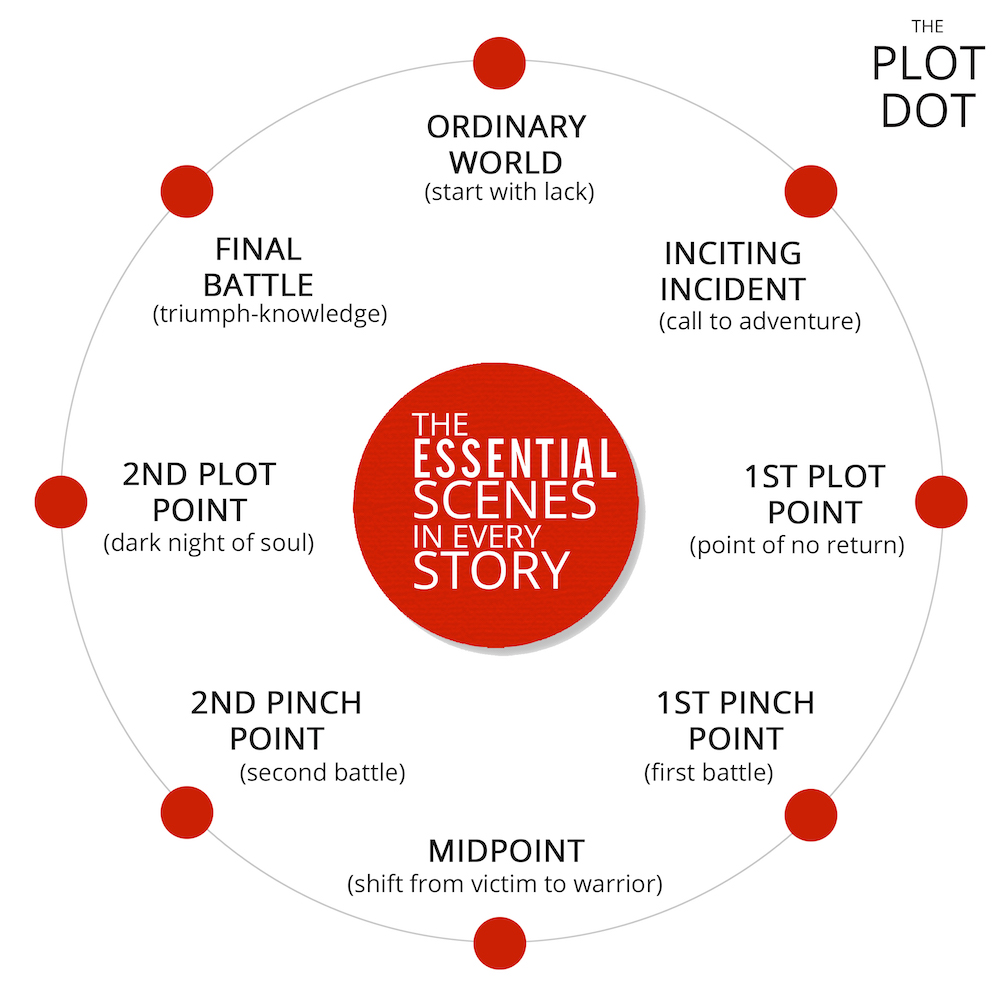
We have our opening, the inciting incident, and the first plot point which is the point of no return for the hero to choose whether they’re in or they’re out. Then we have a first battle (or first pinch point), the midpoint of the novel, and a second pinch point which I think of as the sucker punch that takes the hero out briefly, literally or figuratively. The second plot point or black moment is followed by clarity and that leads to the climactic final battle.

All of these are really things you need to have thought about before you start, in my humble opinion. If you haven’t considered what the characters have to lose to reach the black moment and despair of ever succeeding, that’s rather critical to the story. Same for what obstacles they must overcome. Yes, you can go into your novel with no plan at all, but that tends to lead to getting lost and frustrated in my experience. So think about the eight points I just named. I strongly recommend having thought about them, whether you’ve nailed them down before you start or not. Just thinking about them gets the wheels turning.

Everything Else Is A Potential Plot Hole.

Let me say that again. Everything else is a potential plot hole.

If you’ve got eight “tent poles” holding up your thin plot outline, anything between those tent poles could fall through. This is where I lose many pantsers, because that’s part of the enjoyment of writing, the navigation of those leaps from plot point to plot point. I say that yes, that is the fun. But you still have to acknowledge that there’s potential for black holes of the plot-eating variety.

So what’s to be done? Just think about the things that could go between the eight points listed above. Not necessarily what should, but what could. If the hero is in one place for the inciting incident and needs to be somewhere else for the point of no return, how do they get between the two? Is there a scenic route they could take instead of the most predictable path? Not that the scenic route is better or worse than the predictable one, certainly in some genres one or the other is expected, but it’s more interesting if you know what the alternative would be, even if that’s not what you write about. It’s also extra depth for the scene you do write.

The second pinch point is a second battle which is either lost or very nearly so. This brings on the despair of the black moment, and rightly so. What does despair look like for the secondary characters, not just the hero? Often we need a secondary character to somehow jump-start the hero’s understanding that yes, there is a way through this; what state is that secondary character in when they encounter the hero? If there’s no secondary character involved in the decision, what is it that the hero realizes? Can you do it with a flashback or subtext instead of monologuing their thought process?

For pantsers, I don’t recommend trying to fill in each space between the major points this early, mostly because you’re going to end up changing your mind about something while writing. Some people (dedicated planners) do, and that works for them. If it helps to make a bunch of scene notecards and stack them up so you’ve got them on hand, great! Do it. This is the week for you to do whatever will make it easier to write come Sunday the 1st. My recommendation is more of the “what if?” variety, and even if all you end up with is a set of scenes that don’t fit that spot in the novel, that’s a lot more information about what you do want than you had before. Those scenes that don’t fit also may be of use somewhere else.

Organize Your Writing Space and Time

If you haven’t already, try to set up a space that is just for writing. It helps to have a mental trigger for writing focus, and having one place you write can be very helpful. If that’s not something you can do, what might you be able to set aside? A specific NaNo mug you bring out and fill with your caffeinated beverage of choice whenever you’re writing? What signals your brain that this is writing time? Do you have a specific noveling playlist? I know a lot of people who have playlists for writing, but sometimes you can narrow that down further to music that suits your novel. I often end up spending long hours listening to music mixes on YouTube; there are a lot of talented people with better ears for music mixing than I have who have posted themed mixes of varying lengths. Some of my favorites are tagged with keywords like “epic”, “adventure”, “dramatic”, and others. If you haven’t considered music, I’d suggest searching for music mixes with keywords appropriate to your novel. I lean toward active music that keeps my head in a forward-progress mindset.

I can’t stress having a schedule more. Setting aside time for your writing is critical to not be constantly in the “I’ve only got a few minutes” mental space. Plan it into your daily routines whenever it fits, whether that’s first thing in the morning or late at night. Set up a schedule of some kind (Google Calendar, Reminders, a big chart on the wall…) and then stick to it. If you can make the same time every day be writing time it will help enforce the habit of writing your daily word count. (I personally think any scheduled time to write is better than nothing, so that’s where I aim. If I can get the same time each day, great.)

This is also the time to warn your family, friends, coworkers, and pets that you will be writing like crazy during November, and you probably won’t answer your phone during times you are writing, have time for as many chores, be as genial as usual, and your life will revolve around writing. There are amusing memes like “caution: writer at work” and variations that are more accurate than you might want to admit. Sometimes posting these on social media might clue in anyone who follows you. Irritation is a common side effect of not being on track, as are dramatic mood swings, staying up till 3am or later, over-caffeination, and so on. NaNoWriMo actually posted some images to share (link goes to a Google Drive folder) that I think are cute. Use these or create your own!

Productivity Tips

Carry a notepad or journal everywhere with you in November. This helps with the random ideas that come at times you can’t sit down and write them. I recommend writing your eight major story points on the first page, or on a page flagged with a sticky note for quick reference. That makes it easier to relate your sudden inspiration to a specific point in your novel.

I strongly recommend journaling about your novel in addition to writing your novel. It really helps to get your thought process into concrete form, both so you can pick it up again next time you write and so you can work your way out of plot holes. I undoubtedly forget to do it every day, but it helps enough I’ve made a goal to try and free write about my novel daily throughout November, and I’ve added that to my schedule.

Set yourself goals. If that means you start week one of National Novel Writing Month with a goal of 2000 words per day to be ahead of the game by week’s end or you plan some reward for each 5k words written, the goals and rewards will help keep you moving forward. The carrot and stick method (referring to getting a donkey moving with positive and negative actions) can be fulfilled with adding tasks for yourself that you don’t want to do. (Example: If I don’t write my daily word count today, I have to clean the bathroom.) Make it a bit more fun by offering IOUs to family, friends, or coworkers as the penalty for not meeting your set goal. (If I’m not on track at the end of the week, I’ll go shopping with mom. If I don’t hit 10k words by Friday, I’ll do Frank’s expense report.) A mix of rewards and penalties can really help motivate you. This is the same logic for why NaNoWriMo helps you write more; you set a goal and race to finish it because it’s there, not because you wouldn’t necessarily have done the writing otherwise.

Create a sticker chart or other visible progress meter, and I strongly recommend it’s something posted on your wall, sitting on your desk, or some spot that’s not just buried on your computer. (Even if you make it your computer desktop, most of us aren’t looking at our desktop much, we’re in our browsers and apps.) It’s almost disproportionally energizing to be able to stick a gold star to your day and know you did well. I’ve started using a whiteboard calendar that is magnetized; I bought a bunch of plain 1″ round black magnets and added stickers to them so I can reuse them each time I participate in National Novel Writing Month.

If you have five minutes to write something, don’t be afraid to use it; I warn people that “I only have five minutes” can be a serious drag on your creativity. The psychology behind it is somewhat beyond me, but when you’re focusing on the clock, it’s hard to focus on your writing at the same time. The best suggestion I have for this is using a timer on your phone or computer (there are plenty of simple timers online) so you can set aside the focus on the clock. Your timer will tell you when you have to stop, so you can focus completely on the writing.

If you’ve never heard of the Pomodoro Technique, check it out. The idea is that you set aside 25 minutes to focus on a task (the “pomodoro”, named for the creator’s tomato-shaped kitchen timer), then take a 5 minute break to stretch, respond to the text you received, and move around a bit. (I also sometimes use 50/10, but 25/5/25/5 in an hour helps keep me from sitting in one position too long.) Every four pomodoros you take a longer break. (This doesn’t suit my OCD tendencies that like nice and even hourly scheduling, so instead I make sure that every fourth or fifth pomodoro is entirely a break. This longer break also helps for those of us spoonies who can’t do for long periods of time.) When you train your brain that you can focus entirely on the task at hand for those 25 minutes, your productivity increases. It does really work. Turn off notifications for emails, set your phone on silent, and focus for a dedicated period of time. Instead of stopping each time a new notification pops up, you’ll accomplish things faster and you can use a pomodoro to batch all those responses to emails, texts, and phone calls all at once. The Pomodoro Method works regardless of the task, I might point out, too. I now schedule my chores into my day to break up periods of sitting at the computer, and I know I’ll stop and return to work again so I’m not fretting about it while I do the dishes or laundry. There are dedicated timers for the Pomodoro Method online you can use, I’ve been using the tomato-timer.com website since it offers options to customize times, sounds, and notifications.

If your workspace isn’t private, consider playing music with headphones that will block out nearby noise. (This can also help clue-in family that you’re working.) You’re less likely to hear your phone vibrate (it’s set silent, right?) or someone ask you a question that really doesn’t need to be answered right now. Hopefully they look over, see the headphones, and just determine to ask you later.

Other than that, you know yourself best! Set up plans that work for you to maximize productivity. If that means you do your meal planning once a week after you meet your word count goal so you don’t have to have that in the back of your head, do that. If you can do it this week instead, maybe make some quick dinners to freeze and reheat, that will help out, too. I use this week to plan out weekly chore schedules for all of November so I don’t get to the end of the week and realize I have no clean underwear. By doing it ahead of time, it’s already on my radar and I plan my writing time around it.

USA, don’t forget: Daylight Savings Time ENDS November 1st!

There’s No Place Like Home: Setting in Fiction

Many writers focus on their characters or their plot. Fantasy and science fiction writers will create fantastic and intricate settings that are shown off over the course of their books, like a fancy car they have to show all their friends. But where’s the middle ground? Setting is the stage for all of your plot to take place; your characters are interacting with their environs at all times whether it’s paid much attention or not.

How often do mysteries or thrillers take place at night? That’s part of your setting, right there. The burnt-out lightbulb, the scent of something burning, indeed many of the clues in a whodunit story are provided by the setting. Would the famous scene from Romeo and Juliet where she’s on her balcony and he comes to call on her secretly work in broad daylight? Not particularly stealthy. Thus ends the tale of Romeo and Juliet, never having gotten off the ground, as he’s attacked for sneaking into the grounds of the Capulet family’s abode and stealing close to Juliet, their sainted (and virginal) daughter. The end.

Setting a dramatic scene at a family gathering, such as a holiday meal, immediately gives the reader context. Family engagements come with family drama, there’s always someone who doesn’t want to be as genial as others, maybe a black sheep of the family, maybe someone with a new life event (job, relationship, etc.) that gets talked up whether they are embarrassed or not. All of this is added to the scenery just by stating that your character is going to a holiday dinner. It doesn’t even have to be a real-world holiday, you could make up a holiday that’s specific to a fantasy world or alternate reality… the context still applies.

Suburbia versus inner city. Nearby people speaking more Spanish than English. What music is played on the boombox of the kids playing outside. Small changes can tweak the reader’s perception of the locale without bringing direct attention to it. So the key question is really, have you made the most of your setting choices?

Avoid Lazy Setting Decisions

That may sound obvious, but it’s harder than it might seem. For me, if I’m thinking about writing something realistic, I almost automatically am thinking about suburbia. I grew up in such a setting, I’m familiar with it, and I’m comfortable writing there. (I just did, in fact, with a story last week.) I promptly chose a different character for my next story, because I was somewhat bored with my story set in suburbia.

Question your choices. Did you consciously choose to set the scene where you’re imagining it? Is it simply there because you’re comfortable with the locale? Is this the easiest place to set the scene, or the best place? Consider shifting any scene that’s merely convenient until you have the perfect place. If you set the scene at a bar, will having readily available alcohol affect the way the scene plays out? How would it affect the story if you set it at a park bench instead, where a character can then bemoan not having a drink?

The other keyword to avoid is arbitrary. Arbitrarily setting a scene at a fancy dinner party because you need the character to be in public while they chat up the antagonist is actually adding a lot of minor characters and interruptions (“Can I get you another glass of wine, sir?”). Would having them meet on a street corner work as well, and allow the two to focus on one another with all the distractions remaining in the background? You have other minor characters who can be involved as needed on a street corner just as much as in the dinner party, but without guaranteed conversation being attempted or interruptions being made. Figure out what the purpose of the setting is, and then make sure you haven’t created extra work for yourself.

It’s okay if this isn’t something you innately are conscious of. Most of us aren’t. I’m still struggling with the setting of my first chapter because the first scene simply didn’t work. The settings that come to mind are mutually exclusive, and each would have only some of the information I need to convey to bring the reader into my fantasy setting. So I’m still searching for the right setting. If this happens after your first draft, don’t worry, it can still be done. It’s just easier if you think about it before you start writing.

Worldbuilding

A quick note about worldbuilding. Some writers build their settings as sweeping epic landscapes full of strange creatures and beautiful vistas, all of which they later struggle to include in their text. There’s nothing wrong with this, precisely, but be aware how much you have to explain to your reader, often in the first few pages.

I am not going to try and tell you how to build your setting from scratch; if you’re a worldbuilder, you probably have that well in hand. If you don’t, perhaps consider aspects of your favorite genre fiction. Are there other races, as in Tolkien’s work? Are they all human but they have superpowers? This might be a good place for another list of your favorite elements and perhaps a list of things that bore you, so you can choose to build your setting accordingly.

There’s simply too much on the topic of worldbuilding for me to cover it all in this blog post. I’ll try to get an article written later on, but I won’t have time before NaNoWriMo starts on November 1st. For now, I’ll point you to Janice Hardy’s blog, where she describes the differences between setting and worldbuilding, and how each affects the other. I will also direct would-be Tolkiens-in-training to this blog post about the strengths of Tolkien’s process and how that affects (or should affect) those desirous of emulating him.

How Much to Include

I like this article by Jody Hedlund that has broken it down into some basic steps that can be kept in mind while you’re writing. Some of this is just good advice on description, such as using all five senses. That’s not setting specific, precisely, but it is most often applicable to the sights, sounds, and smells around whichever character is narrating. I find the most interesting details that stand out to me are often the ones that are based on the other, lesser-used senses: taste and touch. Is a perfume so strong the character can taste it? When they remove their gloves, does the scene change in some small way, as they find the dust on the desk, or the roughness of the worn wood beneath it?

Many of you may be familiar with Chekhov’s Gun—a dramatic principle that states that every element in a story must be necessary, and irrelevant elements should be removed. Elements should not appear to make “false promises” by never coming into play. “If you say in the first chapter that there is a rifle hanging on the wall, in the second or third chapter it absolutely must go off. If it’s not going to be fired, it shouldn’t be hanging there.” I might hedge a little on this one for writing instead of theatre, simply because a gun display says something about the character that owns it, but if that character is already established, if the gun display provides no new information, then I agree with Chekhov. This is a critical line to draw for anyone trying to describe but at risk of putting too much into their scene, for both too many and too few details will disrupt the flow of the story. Have you described the parts of the scene that matter? You can’t have a character pick up a cookie and eat it later on if you haven’t established either a plate of cookies or at least the smell of cookies baking. With the latter, at least the reader isn’t surprised when cookies arrive later, but you’d still need to include that arrival. No cookies out of thin air, please. (Actually, if you are capable of making cookies out of thin air, let me know. I have a job offer for you.)

It can be hard to differentiate between what’s detailed enough without being overwritten, and it takes practice. First drafts for most of us rarely get it right, no matter how long you’ve been writing. (Perhaps authors like John Grisham may have it down, but I’ll admit no familiarity with such levels of talent.) In first chapters, especially, but any new setting location needs to be described well enough to ground the reader without throwing too much at them, and then add details to give the focus to what you want them to take away, rather than what speaks to them.

Your Task, Should You Choose To Accept It…

This week, go back through any notes you’ve made about setting. If you haven’t made any, brainstorm. How many of your scenes have to be set somewhere in particular? Develop those settings with sights, sounds, and smells that you can use in both your first description of the area and in later, shorter descriptions as you interact with the setting.

From the few must-have places, brainstorm some alternatives. What’s the transitional place between place A and place B? Is there a street the character must walk down, or a highway they must drive along? Transitional places may not be settings for entire scenes, but there’s something to be said for a scene that starts with a phone call in the car on the way home, because the main character is running late. What sounds might be audible to the other caller on the phone? Transitional settings are also great idea fuel, because interruptions of routine can be as telling as dramatic conflict. I really enjoyed a moment in It’s a Good Day to Die Hard, where a random comment about traffic patterns during a taxi ride turns into a clue later on for Bruce Willis’ character Jon McLean to realize something’s up. In addition to transitional settings, alternative settings might be the back yard instead of the living room of the main character’s house, or the captain’s cabin instead of the bridge of a starship. Similar, yes, but they add slightly different tone, have slightly different sensory stimuli, and even different etiquette.

After broadening your setting thoughts with alternatives and transitory places, go back to the characters and any scenes you may have planned and pick out places which would add tension for that character (at their ex’s favorite cafe, or a job site they were fired from) or to those scenes (a robbery right next to the police station). Can you change any of your setting decisions based on these thoughts? Do any of these add the right level of tension for the scene? Anything that makes a scene too tense can be thrown out, because there are scenes that deserve to be relaxed. But many scenes need some sort of conflict driving the story forward, and these minor changes can add a level of tension that keeps things moving.

Last Up Before NaNo: Plot!

Who is your Character, and what does he do?

Taking a cue from Ahnold, this is only the first of many questions you need to ask of your characters. (Also, welcome back to the meaty article series for National Novel Preparation Month.)

Some authors swear by the infinite detail system, in which you systemically and categorically (but perhaps arbitrarily) write down every possible detail about the character. I find this both excessive and a waste of both you and your character’s time. I prefer a more pointed inquiry. Yes, some details are nice, so your character doesn’t have blue eyes in one scene, and brown in another. Beyond that… I wouldn’t write things down ahead of time. If you come to a point during November when you need to add something, add it then, and write it down accordingly. Having the note of everything you have decided is important, for the aforementioned blue/brown eyes reason. But if you don’t need it yet, skip it until you find a useful purpose for it.

Who is your character, and why should I care?

This is the real question. If I pick up a book, and I find a hero off on a quest who is Perfect In Every Way™, I chuck the book and pick up something else. Bo-ring. There’s nowhere to go from perfect except down, and I’m not in the mood to watch a perfect character spiral into depression. Not an ideal way to spend my hard won free time. This is a key point. Not everyone reads anymore, and those that do are finding time around their infinitely busy schedules. You’ve got to earn that!

First of all, if you followed my articles on prep, you saw my breakdown of the basics for any character (from my Conceptualization article) as follows, which pretty much summarizes the “meat” of the character and their role in the novel.

Compelling Character:
Desperate Desire:
Specific Situation:
Classic Setup:
Wound:
Flaw:
Inciting Incident:
Quirk of Fate:
Theme:

If you have all of these for each character, great. If not, you should probably work on the big picture points before getting into the details. The critical item is really the first one. What makes a character compelling?

Readers need to be able to relate to your characters somehow. Pinnacles of Perfection are not only boring, they’re un-relatable. None of us are perfect, and while we’d love to be, it’s impossible. We’re only human. (Even if your characters may not be, the intent of that expression still holds weight.) Harry Potter as the boy who lived under the stairs at the beginning is exaggerated, but we have all been marginalized, condescended to, or generally looked down on for some reason. Being orphaned, too, is something people are familiar with. My parents are both alive, but I can still relate to someone having lost theirs. I have friends who have lost parents, and I have felt their pain as they dealt with the loss. It doesn’t have to be a character trait that I (your reader) share, as long as I can understand it. Human qualities, troubles, and desires are relatable. Even if your reader can’t precisely relate to an elf witch in a position of power having a moral dilemma, the moral dilemma is something we all understand.

The first three points on that list of basic traits are all going to interconnect. What does your character want more than anything else in the world? Usually, what they don’t have, despite past trying. No one is a clean slate. Everyone has already been through wins, losses, mistakes, and displeasing neutrality. The character is the sum of all those parts, and it’s important you include both ups and downs. Let’s see, my current desire is to publish a novel. I’ve written a ton. I submitted some to contests and publishers and got rejected or failed to win any real prizes. I have participated in NaNoWriMo events for years, though I’ve only won some of the time. I’ve now ghostwritten a novel that’s going to be published, but haven’t got one that I can put my own name on. Each piece fits as part of the whole, so while “struggling writer making a meager income with odd writing jobs” is probably relatable as a character, and “getting a novel published” is a desire I assume you all can understand, the scenario is really what sells it. What single thing has its figurative boot on the character’s neck? Let’s get out of my head (it’s scary in there) and picture a writer character instead. Is it because they have some kind of innate quality that the world is out to suppress? Did they rack up huge debts both in relation to their goal and maybe alongside it, too? Maybe their status in life means they’re writing on the back of recycle bin paper with stolen pens while working as the publishing company’s janitor, and wouldn’t dream of showing such a composition to anyone? This is the crisis you’re offering to solve with the novel. The hero wouldn’t decide to be heroic unless doing so gave them what they desire and got them out of whatever hole they’re in that kept them from having it already. Even those heroes that seem to be heroing for the greater good are really doing it because they have a desire to uphold the good, or to be seen doing so. Often heroes with no better reason than “it’s the thing to do” are going to falter on their journey. Whether that means you decide they will do it because it would affect their status if they don’t (money/power), affect someone else they care about (love), or something like that is fine. Just be aware that there is an underlying reason.

Which Brings Us To Motivation and Development

Motivations are really what it’s all about. Why the hero needs to save the heroine, or fight the bad guy. Most of the time we like to think about our desires drawing us onward, but let’s face it. A lot of the time we’re really just trying to stay two steps ahead of the crocodile at our heels.

Ultimately, as we grow up, a lot of the lessons we learn about life aren’t all sunshine and rainbows. We learn hard truths when we get hurt. When we get rejected, or refused, or laughed at. Think of the desires as the mask your hero wears because they’re too ashamed to admit what they’re afraid of. Rejection? Were they made fun of because of how they dressed, how much money they had or didn’t have, or something else? These things are going to be part of what has shaped their worldview. We say we’re over things, but what we really mean is we’re not going to get caught doing that again. Whatever “it” was. If they got laughed at for how they dressed, maybe they’re a model or fashion designer now, or even an artist. Having money? Doing charity work. Not having money? High powered executive type with a large salary. The only characters that start in one situation and never leave it are minor characters, because we don’t care enough about them to let them have real development. (If your main character fits that single-situation description, full stop. You need to overhaul that character immediately.)

Now, some of my readers are whining, ‘but that’s not what my hero is doing now’. Okay, why not? What changed? We are pretty simple creatures. We want what we don’t have currently, and we need to show the rest of the world we aren’t that loser anymore. (Ask any high schooler, ever.) If your hero isn’t seeking what they didn’t have once, what changed? Even if they aren’t putting it into the same words, they’re working for what they lack, and any change in course after that probably means new hard truths about life kicked in. So think about how your character develops. Not just before your novel, but during it as well. Why do they do what they do?

Allow me to add a little structure to your answer:

Opening Mindset: NAME wants DESIRE, but due to EARLIER EVENT, falsely believes LOGICAL FALLACY rather than risking WOUND again.

Transition Mindset: Now that EVENT HAPPENED, NAME has reconsidered their DESIRE, but only partly updated their belief that LOGICAL FALLACY, turning it instead into MODIFIED FALLACY. They’ll need A KICK IN THE PANTS to move into their new mindset.

New Mindset: Now that A KICK IN THE PANTS HAPPENED, NAME has reconsidered their DESIRE yet again, and this time realized that NEW BELIEF puts earlier events into a different perspective.

Yes, I’ve been rather blunt with my parameter names. It’s not supposed to be rocket science. I find using this in my character template sheet makes me start working on a character, see this, laugh, and then I’m in a better mood to keep working. You have to look at the hero before anything started happening to find out where they’re going, and it’s only once they’re going that you’re going to find reasons to lead them astray. Good reasons or bad ones, even. It’s okay, sometimes good things can happen that change their course, too. Let them meet someone nice. Not taking them where you want them? Lover cheats on, lies to, or dumps the hero. New job taking them a little off track? Maybe things aren’t going so great with relatives, friends, or other people they care about, and they need to go help.

The key is to get them moving!

There’s More To Characters Than Meets The Eye

But sometimes what meets the eye is part of the plot, too. Instead of thinking of characters as a whole, try to think of them as a group of traits. Mr. Potato Head, if you will, but expand that analogy to include all the other traits, internal and external, that you’ve been working on so diligently so far. Romeo and Juliet only works because they’re from opposing families. Could you make that opposing countries? Sure. Love stories where the lovers are of different races, colors, or creeds are compelling.

You don’t have to keep your characters exactly like you came up with them. Ideas can be improved upon, that’s why it’s so much work to be a writer. You can swap character traits around to make your story stronger. If the Romeo and Juliet star-crossed lovers issue is at the core of your main characters, try poking at some of their other characteristics. That scenario often to makes them “a lover, not a fighter” (at first, at least). How might the story change, if that did? Would Romeo brave her father to publicly ask for her hand, some time when he’d either have to fight for it physically (challenge someone in her family to a duel?), or intellectually—maybe he strategically gets the Prince into the scene so that violence couldn’t break out? I brought up causality in earlier articles. Here, too, cause and effect.

Your Task, Should You Choose To Accept It…

Take out a blank sheet of paper (or blank word doc, but it helps to be able to do these side by side). For every trait you have for your main characters, choose something else. Are they white? Make them black. Now think, “Does this hypothetical new character fit the plot as well? Better?” If they fit just as well, your racial choices are simplistic. Too simple and there’s no effect on the story. Not all traits have to affect the story, mind you, but a good percentage of them should. Only a character who is the perfect mix of right person, right place, and right time fits the plot you are writing.

Not all your traits need to be divisive, either, race is simply an easy trait to poke at because all characters have that trait. Sometimes the difference could be as simple as giving the character blue eyes in a nation of brown-eyed individuals. Of course, then you have to explain why the character has blue eyes, but you’ve made a choice that definitely makes that person stand out. People that stand out tend to get noticed by others. Small ways, like the eye color, are enough for interest. Why does the love interest find them so intriguing? Their eyes are different. Now the love interest wants to interact with the character, even if just for a moment.

Go through most of your traits, and determine if you chose them because they were easy (or like yourself), or because they actually affect the plot, setting, or other characters. I can’t give you a number or even a percentage of traits that should affect the story because everyone writes differently. But I can tell you, if none of your character traits affect the story, that character is the wrong person for the main character role.

Ha! My characters are awesome, well-rounded individuals!

Great, I’ll buy your book when it hits the best seller list. (Yes, this is sarcasm. You’re not done yet.)

You can either move on to the window-dressing (height, weight, eye color, favorite food, etc.) or you can start working on how to ruin their lives. You now have all their wants, needs, fears, and situations written out. Take them away. Ruin them. Make it an uphill fight, both ways, in the snow… yeah, I’m actually serious on this one. I’m not cheering for a hero that didn’t have to earn it. You made the character compelling, “earning” my decision to spend my hard won free time reading the book for a bit. Now you have to keep my attention.

We live in the digital age where movies and TV have upstaged traditional media with a mile a minute action and CGI effects. If you can’t make the character’s fight harsh, strangling, and nearly lost several times over, you’ve probably lost your reader to the latest movie or TV show. (What do we call Netflix’s series, just “series”?) It’s not a guarantee, and many readers are devoted to reading. But there’s got to be something hard-won, even if all the character wins is self knowledge and the will to act. It’s that struggle that keeps us turning pages.

Countdown to NaNoWriMo!

We’ve reached October, and we can all count the days until November and National Novel Writing Month roll around! (I searched for an appropriately excited-scared gif for this blog post, but I just couldn’t find one thrilled enough.)

So! How goes your planning for NaNoWriMo? Hopefully you’ve decided on a premise from however many ideas you might have, and worked your way up to a blocked out concept with some character ideas, setting plans, and thoughts about what twists and turns may be of use. Have you named your main characters? Did you pick the right setting to highlight your story to its fullest potential? What are your primary plot points?

MICE Quotient

Last month I went through some big picture planning, picking genre and point of view, idea and plotting method. This month I’m going to focus on adding more detail to your Characters, Setting, and Plot. But first I thought I should point out why I’m doing them in that order.

What are the different kinds of stories? Forget about publishing genres for a moment; there isn’t one kind of characterization for academic-literary stories, another kind for science fiction, and still others for westerns, mysteries, thrillers, or historicals. Instead let’s look at four basic factors present in every story, with varying degrees of emphasis. Balancing these factors determines what sort of characterization a story must have, should have, or can have.

The four factors are milieu, idea, character, and event.

Orson Scott Card, Characters and Viewpoint

Orson Scott Card saw the primary conflict in all stories could be broken down into four categories, and then from those categories, you could build different kinds of stories. He called it the MICE Quotient, which stands for Milieu, Idea, Character, and Event. Different genres focus on different factors. It’s impossible to break things down further and provide a one-size-fits-all method for creating a story.

Even so, all stories kick off somewhere. Whether your character introduction gets interrupted by your inciting incident or you’re still revealing parts of your world, there’s always a catalyst moment that starts the plot moving. Perhaps that’s why many writers outline their plots in such detail, I’d have to ask someone who is better at planning than I. The big plot points are often known to you by this point, it’s the little moments that aren’t. What drives those? Your characters.

In one of my books in progress, the main character’s flaw is pride. She has a prodigious gift that makes her capable of a lot more than she could ever have dreamed, and it makes her reckless until she’s shown that there are some problems she can’t fix. In order to show her that, I had to have something bad come about due to her recklessness. That had to fit into my plot somewhere. It would never have happened if I didn’t know my character, and once I’d added it, that scene ended up driving several others I hadn’t planned for, either. I posit that no story is going to impress readers without the characters, and that means character development arcs that are natural and make the readers care. Sometimes this happens after the first draft, but you can get a lot more accomplished in a single draft if you’ve planned the characters out before you work on the smaller pieces of your plot (or, for pantsers, before you start writing, so you know what needs to get in there somewhere).

Why setting before plot, then? Because you need to know your setting well enough to have natural solutions when you come up with a plot twist that takes your characters somewhere you didn’t plan for. Where does your main character go when they’re scared? Do they have a quiet place they go to think? If they’re traveling, what are they bringing with them? In the absence of their home turf, what do they seek out if they need to stop along the way? Your characters and your setting interact a good deal, and you can get a ways ahead if you do the planning beforehand. (Not to mention fantasy novels focus a good deal on their settings and you need to know the coolest parts of the setting before you can show them off.) At that point you can start on your plot, include the character development points, your major points, and see what’s missing.

Miscellaneous Resources I Haven’t Shared Yet

  • Writer’s Digest. As much as I don’t like to boost other places, this one’s worth it. There’s a lot here that you have to wade through, but they do have a search function.
  • Brandon Sanderson’s YouTube class on Writing Science Fiction. I’ve heard good things, though I haven’t watched it myself yet.
  • Lee Lofland’s blog about writing crime fiction. He was a detective at one point and now runs the Writer’s Police Academy once a year as well as consulting with authors. He also has a book about Police Procedure for writers through Writer’s Digest that I’m told is really good. The Howdunit series also has books about Forensics and Poisons by other authors.
  • Stanislavsky’s Insights: Writing techniques from the acting world.
  • Boston Public Library’s Resources Guide to Writing Fiction. Managed by one of the Boston region’s Municipal Liaisons.
  • The same librarian who put the resources above together also put together a peer-to-peer Learn To Write Fiction course, which while it may be hard to do solo, has a number of exercises and resource links.
  • Derek Murphy’s Plot Dot, for visually-minded writers (and anyone who needs a new perspective on their plot). Mentioned this last week, but the site and the free book are significantly different from the NaNo Prep 101 worksheet.
  • K.M. Weiland’s 7 Steps to Creating a Flexible Outline for Any Story. I have found this extremely useful, especially as someone who isn’t good at planning. I base most of my prep efforts around this process.
  • Dan Harmon’s Story Circle. A simplified Hero’s Journey for any writer.
  • Meditation apps: Simply Being, Relax and Rest, Pzizz, Calm, Insight Timer. I highly recommend taking breaks during the day with a simple meditation like Simply Being that just makes you stop and try to decompress before you get back to work.
  • Pomodoro Technique: a productivity tool to enable better focus and make yourself take breaks. I use tomato-timer.com a lot, at least until I’ve upset it by letting my computer idle during pomodoros (it can get a bit troublesome when it’s confused, but it’s the best I’ve found).
  • Bullet Journaling: a way to keep track of everything you do and need to do.
  • Self Journal by BestSelf: This has really changed my productivity and I recommend it highly.

Next Up: Characters!

Pretty Please, Pick a Plot!

By which I mean, write down your plot outline before you start writing. “But I’m a panster! I don’t outline!” Tell you a secret? So am I. Doesn’t matter. The reason you should outline is because November is a hectic month for pretty much everyone – I have a theory that’s precisely why we do this challenge in November, to teach us that you can write around all the hiccups and crashes if you really want to. School, work, holidays, stormy weather… sooner or later something is going to disrupt your writing flow, and it’s so much harder to get back into the zone. (For me all it takes is a migraine and I’ve forgotten whatever I was writing.) If you have an outline on hand, you can glance at it, know where you are, should be, and where you need to start working toward, and even if there’s a rocky start to get back into your noveling zen, you’re on the right path.

Okay, you’re thinking, so how do I outline and still pants my novel come November? You need a flexible outline sufficient that you have the big pieces in place, but have left the details out. If you have brainstormed ways to get from point A to point B, great. Doesn’t hurt to write it down. If you haven’t, you’ll be pantsing it the old fashioned way with a scene idea and a blank page.

Plotters, I’m not going to forget you, don’t worry. I just need to make sure the pantsers don’t flee before I get to the important part. I generally assume plotters need no convincing to spend some time plotting.

I do like NaNo Prep 101’s Jot, Bin, Pants limited plotting method, but it leaves a lot more to figure out yourself rather than giving you some structure, so I’m going to focus on the others. If you start reading and absolutely can’t stand the thought of spending this much time on planning ahead, Jot, Bin, Pants is for you.

Resources

In years past, I would have had an even longer blog article about all the ways of creating your outline, from the loose to very detailed. This year, NaNoWriMo has done a bunch of it for me with their NaNo Prep 101 workshop. They’ve even got an interactive quiz for which one is probably for you! (Tip: the more detailed you think you want to get, the further down the list of five they’ve got on that page you want to go.) I’ve copied the worksheets made by the NaNo Prep 101 workshop, just in case their links get taken down later, and you can find links to my copies embedded here. There’s also some other writers with good resources, I know I’ve used Jami Gold’s worksheets for writers before, though I’m less a fan of the way she keeps directing you at her paid workshops. Chuck Wendig has a comprehensive list (semi-NSFW) of ways to plan that’s quite a good read if you don’t mind his language.

Romance writers, your beat sheets are going to differ from the plot arcs of other genres. The plotting method I’m currently working with is from Gwen Hayes’ Romancing the Beat, about which you can learn some here on her site, including a free Scrivener template you can download. I recommend it, and if you sign up for her newsletter, you’ll get a free PDF worksheet version. I can add that Jami Gold offers a romance spreadsheet you can use, but it’s simplistic at best, presumably without the paid workshop to go with it. I really like Gwen Hayes’, and I hope you do too!

Traditional Plot Structure / The Plot Rollercoaster

Let’s start out with some basics. The so called “plot rollercoaster” is based on the three acts traditionally taught as the building blocks of a story. When I say ‘traditionally taught’ I don’t mean they’re wrong, mind you, just that there has been a lot more detail added to the explanation by different people over time. Writers have grown out of the basic “beginning, middle, and end” descriptions of the past. Still, your plot overview is going to read something like this:

Act I (0-25%): Set Up. Show us where the story starts. Introduce your story and characters, and then set up the choice to act. Some people throw words like catalyst in here, or inciting incident. Let’s call the early part the hook and the moment of choice the First Plot Point. (Can’t get off the rollercoaster now, Act II is officially kicking off.)

Act II (25%-75%): Rising Action. Something happens to make the hero step out of their daily life and into the plot. They don’t have to choose to be a hero yet, just get moving in the right general direction. The Midpoint (50% mark) is usually a false peak (ie. not the actual climax) or a setback, depending on the story, but now the hero has to be a hero or else. Now they have to struggle to move forward, conflict heats up, and finally there’s a black moment, a point where all hope seems lost. Still, they’ve failed for reasons that teach them something, and now they know what they have to do! Cue the climactic big battle, struggle, or whatever conflict sees the heroes start winning. This turning point is the Second Plot Point. (The heroes are at the top of the world, they have all the information and can see everything they’re about to do spread out ahead of them.)

Act III (75-100%): Falling Action and Finale. Tides have turned, heroes take out each opponent in turn until they’ve won the day. The finale is the victory celebration and the hints at how the characters will go on to live life after the last page of your novel. (Often this means returning all the way to the rollercoaster get on/off point, where the hero returns home or builds a new home, and contrasting it to the opening scene to show the change.)

Seems easy enough, but it can be harder than it sounds. Making such large general categories doesn’t really help if you’re not sure what your heroes should be tackling first. I prefer to make it four groups, where Act II part 1 leads up to the midpoint and then Act II part 2 leads up to the second plot point, just for ease, but whatever works for you. You’ll notice the three acts are not the same length. Acts I and III are about 25% of your estimated total word count, and Act II is the rest. Depending on which advice you take from here, Act I will usually end up shorter than Act III, but Act II is going to stay the majority of your novel. If it weren’t, why would your readers keep reading?

Save the Cat! Beat Sheet

Blake Snyder’s Save the Cat! beat sheet was designed to break the Three Act Structure down into manageable pieces for screenwriters. Some of the terminology is different in his original book, yes, but it applies just as well to novels as it does screenplays. The book has since become the gold standard of plotting, and there are spreadsheets, youtube videos, and all sorts of resources based on the book, both official publications and things other writers have used the template for. I believe there’s even a Save the Cat! novel-specific writing book now, and there’s new Save the Cat! software to plot, storyboard, and write in. (There’s also a subscription discount offer for NaNoWriMo participants.)

NaNo Prep 101 has made us this convenient worksheet to work with, which means you don’t need to investigate any of the links above, it’s all right here. Even if you don’t end up using this method to plot, I strongly recommend you read through the worksheet. The terms Snyder used to describe these scenes and indicators of change have permeated writing culture at this point, and you will come across them again and again. It’s useful to understand where they come from and what they mean.

The 9-Point Plot Dot

You can get the NaNo Prep 101 worksheet for the 9-Point Plot Dot here, and again, it breaks down the structure of your novel into manageable chunks. The difference here is that instead of focusing on the scenes, Derek Murphy highlights the major turning points first. (I know that looks like eight points in a circle, not nine. The “ninth” point is a return to the beginning/normalcy, which is set to contrast with the opening scenes.) These turning points are going to happen in either plotting method, but how you get there is approached differently. You can get his book free on his website, but the explanation is also here on the NaNo Prep blog.

I mentioned earlier that I like breaking the Three Act Structure into four, and this method is essentially why (I just never could’ve put it quite as clearly as Derek Murphy did in his book). The major turning points form the four cardinal points on the diagram above: opening normal scenes where the hero wants something they lack, the first plot point which presents a point of no return, the midpoint change from reacting to taking action, the second plot point’s all is lost moment, and then the final battles that ultimately lead the hero to victory and a new normal once more, just different from where they started. The nine dots are your major scenes, and if you can visualize each of those nine points, you’re probably well on your way to an outline you can work with.

Katytastic’s 27 Chapter Outline

If you’re looking to have every scene laid out clearly, you may be happiest with this. While I will link you to the NaNo Prep 101 worksheet, the real treasure is the youtube video she made explaining it all.

When I was first trying to learn to plot, this was where I started. I wanted to know how to order scenes, what scenes I might be missing, and this is the ideal way to explain it. First she breaks the Three Act Structure into nine blocks, which are the beginning, middle, and end of each Act. Then she repeats that, dividing each block into three chapters. These are straightforward in that everything is based on cause and effect. The introductions may not “cause” the inciting incident, precisely, but once you’ve gotten there, pretty much everything afterward is causality in motion. 

Act I (Set Up), Chapter 1: Introductions. Who is your main character? Where is your novel set? What’s the “normal” of the protagonist’s life, and what is it that they want above all else?

Act I, Chapter 2: Inciting Incident (cause the first). Something happens to shake the hero’s world. What is it? How does the hero greet the first glimpse of plot?

Act I, Chapter 3: Fall Out (effect the first). What happens after the inciting incident? Does the antagonist know it happened and make a counter move? Does the hero meet with unpleasantness? Does the new worldview conflict with the hero’s or that of those around him?

Each chapter builds on the one before it, and before you know it, you’ve got a complete outline. When I have used this method to plot out my novels, I don’t always end up with twenty-seven chapters. Sometimes they do better in combination, and I bet the more verbose of us could find reasons to expand the chapter count. My first novel has seventeen (though it needs revisions), and I believe the sequel has eighteen, six chapters in each of three acts. How you divide things up is up to you, whether you leave them as twenty-seven chapters or not, but you’ll need to write at least a scene for each of those twenty-seven items Katytastic laid out.

Your Task, Should You Choose to Accept It…

Read through the worksheets NaNo Prep 101 built. They’re short enough you can skim them to get a sense of each plotting method without having to spend too much time or energy. Skim them and pick one, and write down a few scene notes. These don’t have to be full sentences, even, just a few words that will remind you of the idea you had later. If you can expand them into full descriptions, great. If not, that’s okay, too. You’ll have time to expand on your ideas. The goal is to have something resembling an outline to build upon as you go forward.

October

My next topics will be Characters, Setting, and Plot, and you’ll want both the concept from last week and this week’s outline to work with and on as we go. Your characters will be getting the full development treatment, teasing out the important parts and suggesting the sorts of things to keep track of both before and during November. Settings and Worldbuilding are of importance, in some genres more than others, but we’ll work on making sure you’ve planned settings for all of your important scenes and that you’re making the most of the nuances setting can give to your story. And lastly, I’ll return to plot once again, at which point I expect the concept and outline will have been filled out in such detail that you probably won’t need more thoughts on plot, but I’ll have some last advice for you anyway.

Please let me know if you’ve enjoyed any of these articles or if anything is confusing! You can use the comment feature on each post, the form on my contact page, or @MEfromson on Twitter or Facebook if you’d like a faster response!

Next Up: Countdown to NaNoWriMo! (Resources and Miscellaneous Advice)

Ideas and Conceptualization

First Step: Premise Next Step: Concept

So far this month I’ve discussed fiction genres and narration with an eye toward helping those planning on writing during National Novel Writing Month. It can be handy to start big and work inward, so the tasks so far have only been general. This week we start getting serious. This is a big entry, so take it in stages! I’ve given suggestions for starting to brainstorm on characters, setting, and plot, but I’ll be getting into them in more detail in coming weeks, so if you don’t have everything you may need yet, that’s okay. We’ll get there.

If you still don’t have an idea for NaNoWriMo yet, consider using a random idea generator like the ones on the Seventh Sanctum site. Most of these generators are formulaic, but that doesn’t mean throwing random elements together won’t spark a good story! If you have your big list of things you love in stories from the first week, try combining some of them in odd ways to see if you can make something interesting. Perhaps merge a few items from that list with the random generators, create something altogether new.

Turn Your Ideas Into A Premise and Concept

Now we come to the heart of NaNoPrepMo, the ever elusive concept. Ideas are all well and good, and most writers find they have far too many to know what to do with. (Like a certain blogger with no clue what she’ll be writing for NaNoWriMo… still.)

The goal this week is to start distilling ideas you have into a more focused concept. Any and all brainstorming you’ve got is good, and it will help you with this. The first step is to figure out a premise that you like.

Keywords: Premise vs. Synopsis vs. Concept

Note that a story premise is not the same thing as the full story synopsis you’d send to an agent or publisher, which details all the major plot points of a story from beginning to end, character motivations, and contains pretty much everything your story will entail, up to and including the ending. Our goal here is a premise, just a focused couple sentences that include the meat of the plot, namely the primary character(s), inciting incident, and the primary antagonist or opposition. First get the premise written down so you can refer back to it, and then expand it into enough detail you can write your story. The expanded concept starts with the premise and then builds in much of the same information you would provide in a synopsis, but is written as a break-down for you, rather than an engaging explanation of how the story goes.

Let’s start with the simpler of my favorite two ways to condense your story into a short premise blurb.

Story Skeleton

A long time ago I found Jim Butcher’s blog, where early on he was posting writing advice for other writers who want to turn their ideas into reality. (I think he has since moved to posting updates on his website, though I’m not certain if writing advice is part of it.) The post where he described what a story skeleton is was apparently from 2004, so it’s certainly been longer than I realized! I’d encourage everyone to read the full article, because he has a lot of good points. This is a very simple description of your story, but being simple does not make it easy. The story skeleton (or story question) is broken down into the most basic pieces of information, like so:

*WHEN SOMETHING HAPPENS*, *YOUR PROTAGONIST* *PURSUES A GOAL*. But will they succeed when *ANTAGONIST PROVIDES OPPOSITION*?

Simple enough, right? Yet it’s harder than it looks. See if you can fit your ideas into this skeleton, and then stare at it for a little while. Did you cover everything that is at the heart of your novel? Does the inciting incident include why it’s of import to the character? If not, rewrite that phrase/clause until it’s obviously a critical moment. Here’s Jim Butcher’s own example: “When a series of grisly supernatural murders tears through Chicago, wizard Harry Dresden sets out to find the killer. But will he succeed when he finds himself pitted against a dark wizard, a Warden of the White Council, a vicious gang war, and the Chicago Police Department?”

It’s somewhat of a given that ‘grisly supernatural murders’ are critical. Murder usually is. But look at the details that are also included in that first clause. A series of murders adds to the concern, and tearing through Chicago establishes where the story is set as well as some of the conflict right there. Supernatural murders in Chicago? Probably not something the cops are prepared for. Whatever your catalyst, it needs to be clearly motivating enough to make your character(s) change their routines and go after it.

This is really the key to your plot. There may be side plots, or diversions thrown in as plot twists, but all of it really boils down to the main character(s), some event that pushes them to act, and the obstacles in their way.

Craft Your Flexible Outline’s Premise

The seven-step process I like most for putting ideas to paper before writing, which the creator K.M. Weiland dubbed the Flexible Outline, can be found here. She has written a number of books on the subject, but that linked article alone has changed how I go about my pre-writing process.

She, too, wants to see a couple sentences outlining the premise of your story. Here’s the example she gave: “Restless farm boy (situation) Luke Skywalker (protagonist) wants nothing more than to leave home and become a starfighter pilot, so he can live up to his mysterious father (objective). But when his aunt and uncle are murdered (disaster) after purchasing renegade droids, Luke must free the droids’ beautiful owner and discover a way to stop (conflict) the evil Empire (opponent) and its apocalyptic Death Star.”

You can see how the starting situation is going to have to change, whether the protagonist gets his desire/objective or is simply rushed along by the plot from the disaster onward. You also have a sense of scope, with things going from a very narrow worldview to renegade droids, an evil Empire, and of course, the Death Star. I think the only step up here from the story skeleton is that the starting situation is included specifically, rather than just implied, and that will be your starting point when you begin plotting.

Have you come up with a premise you’re happy with?

Have you come up with a premise you are satisfied with? If not, STOP HERE. Nothing after this point will be of use to you until you have that premise crafted. Your task is to spend some time brainstorming characters, settings, and plot points until you have a better idea of the story you’re writing. Follow multiple tangents. Ask “what if?” of every plot point, setting, and character trait. Second-guess your choices to see if there are better fits. Could your main character be a different gender? Could you set your story two hundred years earlier? Could your antagonist actually be your hero and spin everything relative?

Expanding Your Premise Into A Concept

Before you can really claim to have an entire concept for your story, you’re going to have to work on three things: characters, setting, and plot. Depending on the order you want to go about it, you may already know some of these, or you may still be working on them. If you have a great setting and a timeline of events, you need characters to bring it to life. A character without context doesn’t do you any good, either. Whether you do this on pages in a notebook or on index cards so you can move them around and see the story start to take shape doesn’t matter. What does matter is that you have some characters, some setting details (organizing settings can be very individual to any story, so whether you describe the world top-down or set individual scenes and then connect them is up to you), and some scene ideas loosely organized. The NaNo Prep 101 exercises may help you a good deal here, and I find their “Jot, Bin, Pants” plotting method is a good way to start if you’re still uncertain. In short, you write things down on index cards, drop them in beginning/middle/end bins and go from there. I’d add a characters bin and a setting bin if you like that, or do whatever works best for you! There’s no single right way to go about writing a novel.

This is the beginning of your Story Bible! If you missed it, check out this article by J.M. Butler on creating your Story Bible. Whether you do it in a three-ring binder, notebook, or software of some kind, your Story Bible is the reference material you’re going to be going back to all throughout November as you write. You don’t need to have a plan for your Story Bible yet, but this is where you start. Index cards dropped in piles are fine! Rough groupings of cards can be organized as you go into clearly organized sections later.

Characters

I am a believer in the power of characters driving the story, so I always suggest starting with your main character(s). Each character needs to be compelling, a real person given a chance at something interesting (inciting incident), with some desire above all others, and a situation that is keeping them from realizing that desire. In general we tend to have pretty classic ways to set up the character for big things. I recently tried to explain how much detail was needed to have a solid sense of the character as follows, basing the explanation on the first Harry Potter book:

Compelling Character: A boy orphaned by the death of his parents “in a car crash”.
Desperate Desire: He wants to belong, to be part of something.
Specific Situation: He was never enlightened about wizardry, and is currently living under the stairs at his awful relatives’ house, who oppose just about everything he does on principle.
Classic Setup: “The Boy Who Lived” (Chosen One trope)

There are a few more things I try to get laid out, because they guide the story and tell you what additional scenes you’ll need to organically grow your character into the hero they can be. All characters have some kind of hurt they’re nursing, something that makes them not always choose wisely, and they have a flaw. Flawless characters are boring. Their flaw tends to be why they falter in their goal, and it is tied to their wound. Consider Severus Snape:

Wound: Lily picked James instead of him.
Flaw: Pushes people away.

I chose not to use Harry Potter for the purposes of this example because in the first book, as with many coming-of-age stories, his issues are often related to inexperience and lack of required knowledge. The purpose of the story is to grow as a character. For that to work, all plots have to start with something happening that changes the character(s) as we’ve established them in the opening chapter(s). Whatever it is, it’s completely unexpected, and changes the course of the character (and thus the book) for good.

Inciting Incident: Magical envelopes start showing up. “You’re a wizard, Harry.”
Quirk of Fate: Not just any wizard, either, everybody knows his name. He’s famous.
Theme: Love conquers all.

With those nine points, you can provide the basic information for any character in any storyline, and have enough information to work on the setting and plot line. Sometimes you may start working on scenes and realize there are holes, possibly because you need a second character to balance things out. Keep at it, with the character template above you can jot down new character ideas as you go. (These can fit on a notecard, should you be the hands-on type.)

Setting

Some stories don’t require much of a setting, rarely more than place names, maybe the cafe the characters meet at, their homes, and that’s it. If your story is set in the real world, you can read the top suggestions and then probably skip past most of my other advice entirely, unless the following applies to you; authors of fantasy, science fiction, thrillers, or westerns… you all have to read further, because your settings need more involvement. Thrillers can be set in the real world, but they need more careful planning because often the way the scenes are presented in a given setting is part of the purpose of that scene.

If you’re writing in the real world, your setting can be much narrower, such as a town or city, or several linked by various modes of transportation. For you, the only differences in setting are going to be the individual locations, real or fictional, such as the main character’s home, the restaurant or bar they meet their love interest at, and wherever else the events of the story take place. You may not even need to plan too hard at this stage, because you have reality as the big picture and that’s pretty well documented already. I recommend creating index cards or notebook pages for each major place, even if you don’t fill them out until later. That way you don’t have to keep returning to Google to search what the main street of town looks like. For a novel I’ve been working on recently, I made two groups, one for each of the two side-by-side towns in which the two main characters live, work, and interact. Town A had the hero’s apartment, his starting workplace, and a restaurant the hero and heroine went to on a date. Town B had the heroine’s workplace, and so on. This way I could always easily find details I was looking for.

For those not writing in reality, or those who need more details laid out early, at the most basic level, you need to write down the big-picture setting, whether that’s “England in the 1600s but with vampires” or “planet hopping across the Milky Way in search of a great sage who doesn’t want to be found”. Consider a few things, and really your baseline is reality right now, so your setting details only need to be to the extent that your setting is not like that baseline. England in the 1600s may be fairly well detailed, but how does the addition of vampires change it? Are they hidden powers behind the throne, or are they widely known? Planet hopping is going to be an even bigger unknown, because you have nothing at all to base it on. How do your characters travel? Are they spending time in space, or do they teleport straight to a new planet like in Stargate? How many planets do they visit? Each planet needs to be different, and there may need to be large sections mapped out or detailed in your notes for the plot to transpire.

What’s the mood you’re conveying? Is this a murder mystery, where most of the setting will feel dark and mysterious until there’s action and blood and screams? Are many scenes set in the light of day or are they shrouded in night? I like to think in terms of polarities, so light or dark, warm or cold, or the themes of seasons like springtime growth and life compared to winter’s hidden life and ice. Whatever works for you, try and get some themes in here while you’re at it.

Are the inhabitants of your setting human? If not, you may need to spend a while just developing your alien or fantasy species. For the purposes of your concept, jot down some notes and move on, you’ll have more time to deal with the worldbuilding later. Tip: It can be handy to write notes to yourself based on your favorite movies or pop culture references, because you immediately know what those mean without needing to write down every detail. As long as you do, eventually, expand out from there, it’s okay at this stage. (Maybe you’re writing fanfiction and that’s the sum total, I don’t know.)

Who’s in charge? You may or may not run into them over the course of the story, but there’s usually some kind of authority figure that plays a role, even if the authority applied to the story is really just the characters’ own morality. What’s the structure of the place, are there police and democratically elected officials? Or is this the sort of place where there’s a village elder who knows all (and if they don’t know it, you’re out of luck)?

What’s the technology level? Whether you’re in the Stone Age, the Digital Age, or Post-Singularity, your characters and the way they travel or communicate will be in part derived from the technology of that era. Because I’m a nerd, I actually think back to the first place I saw this quantified, which was the GURPS System rulebook, the section on Tech Levels. If you are writing a setting that isn’t 21st century reality, the charts on that wiki may do you a lot of good; they lay out what transportation or weapons look like in different eras, and what power or medicine is available. (No batteries in Ancient Rome, thank you very much.) Very handy if you’re trying to build settings based on magic, too, because you can check that chart for the minimum things people without magic would need to be able to do, and then how much easier magic makes life on top of it. And don’t forget Clarke’s third law: “Any sufficiently advanced technology is indistinguishable from magic.” If you’re the handwave it sort, that law is your friend.

Now, go back and write out some of the settings specific to the characters lives, or to scenes you have in your head. Perhaps it’s time to talk about those scenes, and you can get back to writing the settings down as you go.

Plot

I often don’t have more than a vague beginning and ending when I start an idea. I know the inciting incident and I know roughly where I want the novel to end up. For me, the middle is one big gray area until I work at plotting out some scenes. Depending on your concept at this stage, you may already have most of the story in your head. Great! Write it down. If you’re the organized type, you probably don’t need me to tell you how to go about it! I can also link you to the range of options the NaNo Prep 101 workshop offers for plotting next week. I’ll be diving into more on plot methods next week, too.

Outlining isn’t for everyone, and some of you just cringed reading the word. If that’s you, keep reading. I’ve learned that if I go into November without any plan at all, I get lost very quickly, especially when life hits you with a sucker punch. Given that it’s 2020… we may all want to plan some contingencies. Once upon a time someone I knew referred to this as “pantsing responsibly”. I love that phrase, and will shamelessly apply it everywhere I can. Regardless of your organizational preferences, I think we can all agree that the following structure is pretty universal:

Part 1, Setup: Introduce protagonist, hook the reader (including the inciting incident), and set up First Plot Point (foreshadowing, establishing stakes); major goal is establishing empathy (not necessarily likability) for the protagonist.

First Plot Point. The first real encounter with the enemy. This gives us new information, shows the hero what he’s up against, and gives the hero the reason to fight for his goal.

Part 2, Response: The protagonist’s reaction to the new goal/stakes/obstacles revealed by the First Plot Point; the protagonist doesn’t need to be heroic yet (retreats/regroups/doomed attempts/reminders of antagonistic forces at work).

Midpoint. The stakes get raised with new information. This typically is also your “but if you don’t” moment, and will give the hero a course of action to follow.

Part 3, Attack: Midpoint information/awareness causes the protagonist to change course in how to approach the obstacles; the hero is now empowered with information on how to proceed, not merely reacting anymore; protagonist also ramps up battle with inner demons.

All is Lost/Black Moment. Part 3 ends with the protagonist losing all hope, finding the enemy too strong, or otherwise giving up (or considering it). This is closely followed by or the same as the Second Plot Point, where we learn the rest of the big picture, even if the hero doesn’t understand it yet.

Part 4, Resolution: The protagonist summons the courage and growth to come up with solution, overcome inner obstacles, and conquer the antagonistic force; all new information must have been referenced, foreshadowed, or already in play.

Finale. After the climax and final battle comes the resolution and the final image of where the hero’s success has brought him/the world. Paint pretty pictures that are directly in contrast with the introductory scenes.

That’s the basic structure I give to clients when they need some guidance on plotting a concept. It’s very similar to Derek Murphy’s 9-Step Plot Dot method touted by NaNo Prep 101. Whatever you choose to call them, I’ve used these to great success. I’d call those eight points your bare minimum outline. You may not have all of them yet, but those eight points should be your goal before November 1st. I have seen a slimmer five-milestone method based on K.M. Weiland’s Structuring Your Novel, but my personal feeling is that it’s too loose to be helpful when you get lost for whatever reason. I like the eight (or nine, if you follow Derek Murphy’s “return home changed” cycle).

Do you have all those already? Great, start breaking them down into scenes or chapters. Depending on your story, you may need many scenes to establish the setting, main characters, and get to the inciting incident. (Fantasy, SciFi, Westerns, Thrillers especially.) Keep in mind that you don’t need to start writing at the point that your characters get involved with the story. If it helps you, start with the lead-in scenes. Even if you cut them out later, they’ll get you started, and words written always count toward your NaNoWriMo word count total! I often find in fantasy or science fiction that I need more of a start to establish things, and ultimately I edit those scenes down to a few sentences that are key. I wouldn’t have been able to get there without writing out the scenes first to get them solidly in my own head.

Whew!

Yes, that was a longer entry than usual. I think it’s important to get started strong, and we’re now less than six weeks from November! I don’t know where the time has gone, I really don’t. It feels like yesterday I was scrambling to get that first overview post written up. I guess that was three weeks ago. I hope you’ve found these articles useful as you work on your concept for National Novel Writing Month!

Next Up: Plot Formulae!


Author’s Note: This is a big task, and while I’ve written it all as one objective here, this is really your goal for the next five weeks. For now, your task is the premise statement and then brainstorming on everything else I’ve mentioned, and you can worry about turning the ideas into more polished characters and plot points later. Next week I plan to do a run-down on different plotting methods, and then characters and setting aren’t going to be far behind. We’ll be working on each section of this concept one at a time, and there should be plenty of time to get into any areas you’re not confident with before November rolls around.
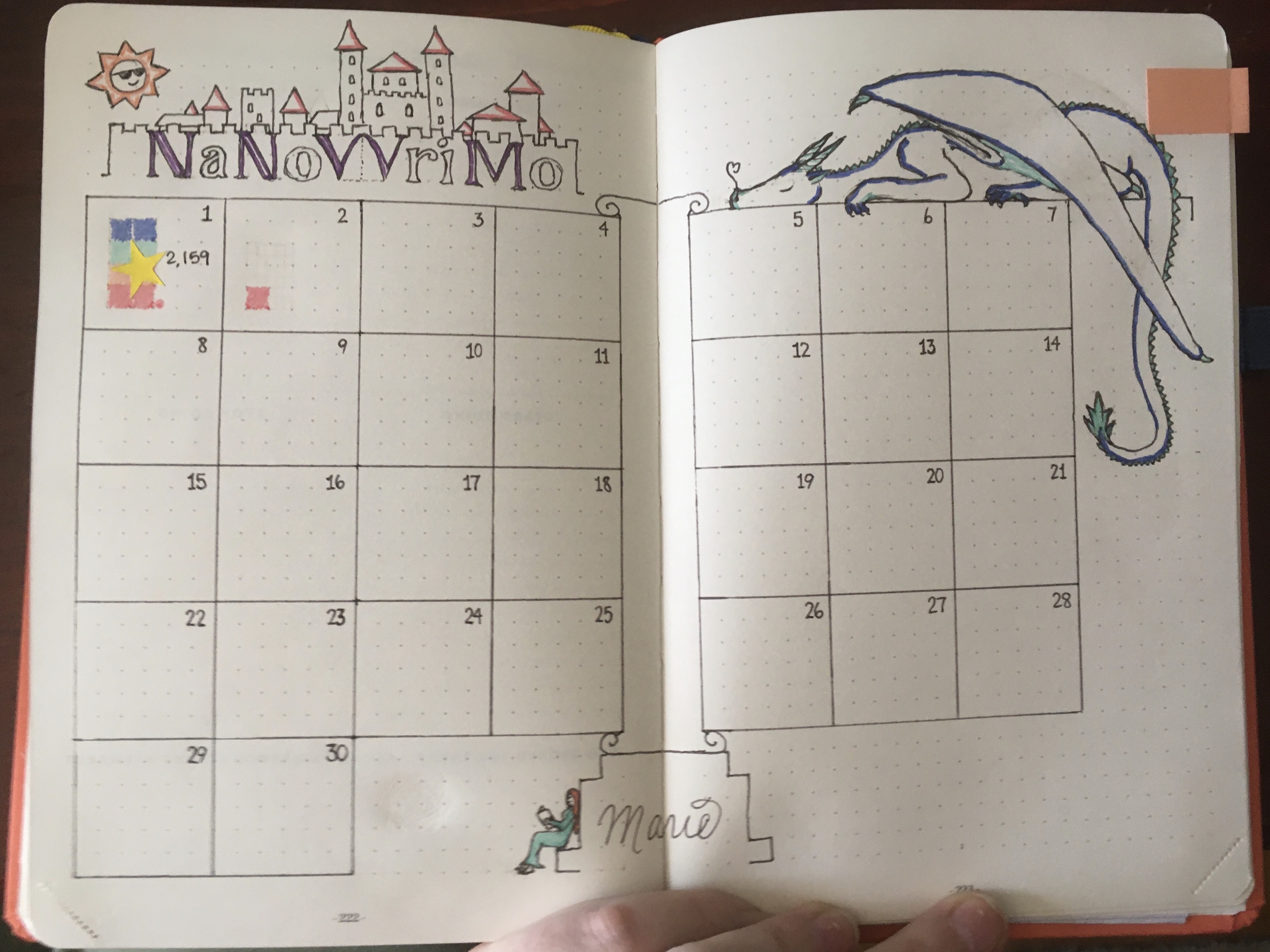
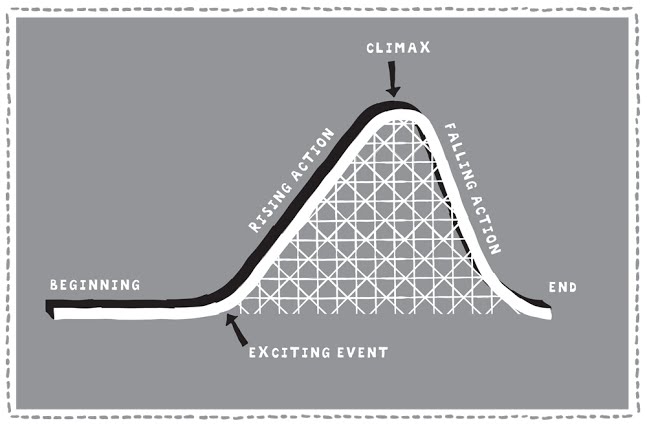
Point of View and Narration

As you work on brainstorming story ideas for this week – NaNo Prep 101 has some exercises that might help if you’re stuck – I’d like you to consciously think about how you plan to narrate the story, and from whose perspective.

I bring this up because while ghostwriting romance, I’ve been reading more romance to get in the zone, so to speak. It seems to be a popular convention of the romance genre to alternate point of view from hero to heroine to give both sides of the story. It’s a bit jarring to go from epic fantasy to a story being told from two sides where “I” means different people in different chapters. Admittedly, I’ve seen it done in both first person (I went, I did, etc.) and third person (she went, he did, etc.), usually third person limited.

If that last sentence didn’t make much sense, this is the blog post for you.

Point of View

First, second, and third person are grammatical terms often unknown to English-speakers, describing how many people there are considered to be in the conversation. First person is “I” in the singular or “we” in the plural, and in a narrative told in first person, the story is being witnessed directly by the reader through the narrator’s eyes. The narrator is the first person in the story, and the most immediately relevant. I would say that the hero is the narrator, but I’ve read stories where the narrator is the hero’s sidekick, so even though it’s told in first person (“I went to talk to the hero”), the narrator can be relating the story of their part in someone else’s adventure. The narrator is definitely a main character.

Second person is when someone else is the key relevant person. (Second-person pronouns are “you” and “you [all]”.) This is often a very hard perspective to write, because “you” are the subject, and “you” are the reader. The point of view is that of whomever the narrator is addressing. “You’re in a bit of a bind, stuck researching this stuff at this late hour. It’s a good thing you don’t have to work tomorrow, so you can sleep then. By the time you’re done, if you never have to look at English grammar again, it’ll be too soon.” This inserts the reader into the story directly, but is not common in fiction. It’s entirely possible to have the pronoun “you” in narration of first-person or third-person styles, and many authors do address the reader directly, so don’t mistake that for second-person narration. (Tip: skip second person until you’ve spent some time researching how to do it well; it takes practice and effort.)

Third person is yet another person being discussed by the narrator as they address the reader. The subject is the main character, referred to by name or pronoun (“he”, “she”, “it”, or “they”) . Grammarly has a good way to think about it: “If you look at a sentence [about Mike] and think “Mike isn’t me,” you can eliminate the first person. You can also think “I’m not talking to Mike,” so that eliminates the second person. You’re left with the third person.

Third person is the most common form of narration, and it comes in slightly different styles. Third-person omniscient narration is when the narrator knows everything there is about the characters, setting, plot, and antagonist, and provides all characters’ thoughts and feelings throughout, giving access to all sides of the story. This can be very helpful if much of the plot is internal monologue or information that isn’t shared between the characters, but it can also give a lot of things away.

Third-person limited (or subjective) is the next, and my personal favorite. This has the narrator essentially looking through the eyes of the character whose perspective is focused on, and during the time the narrator may share that one character’s thoughts and feelings, the narration is limited to that one character. This prevents the villain in disguise from being given away to the reader the moment the hero meets them, and focuses in on how that one character sees things. Note that this doesn’t require you to use only one character’s point of view, only that you pick and choose which character is the focus at any given time. It can also be used to great effect to hide things from the reader and the hero at the same time. If only the hero’s perspective is viewed, the plotting of the bad guy has to be discovered over the course of the story.

There is also third person objective, where the narrator knows nothing but what is visible to the eye, as if they were looking over the shoulder of the main character (outside the main character’s head). This is classically where you might see a lot of “he seemed” or “she looked” sentences, where the appearance of the characters is the only determination of their feelings, and none of their thoughts are known. This isn’t as popular for the obvious reason that there’s only so much you can tell about what’s going on from how things appear. Most people aren’t so easy to read that you can immediately tell what they’re thinking from their facial expression, and so this form of narration leaves out a lot of the pieces that might be integral to the plot.

Which Point of View is for me?

I’m going to preface this answer by saying that I’m biased. First-person narration is a much more modern style, and I’m still not used to it. If you look at classics, you’re going to find third person narration. The only book I’d consider a classic that isn’t third person – off the top of my head, at least – is Mary Shelley’s Frankenstein, and the first-person narration is specifically because it is epistolary fiction, a story told in letter format. Each letter is written much as anyone might write a letter, from their own perspective, with “I” as the subject. I grew up on fantasy and science fiction novels by authors like Anne McCaffrey, Katherine Kerr, Isaac Asimov, Tamora Pierce, and Marion Zimmer Bradley. All of these authors write in third person. So my personal bias is definitely going to lean toward third person no matter what story you are telling. Third person is also a “safe” choice for all genres. If you’re planning to try and pitch the story to an agent or publisher, you definitely want to make sure you aren’t picking a style of narration to which they’re going to object. There are times a publisher will ask an author to rewrite a first-person book in third-person style, but I don’t think any have ever required a book written in third changed.

Now, perhaps the better question given my bias is ‘when should I not use third person?’ instead. I would say that you need to ask yourself whose story is being told, and follow a few questions to their natural conclusion. Are you only focused on one character? If so, first person will work for you. If not, you risk confusing the reader when you start telling a new chapter from the first-person perspective of a new character and there’s little to no indication that “I” now means someone different. This is one of the fastest ways to break the flow of the story for me, or any reader; I reach the point where I realize “I” in the narration means someone new and I’m confused, popping me out of the narrative entirely until I can wrap my head around the change. I have read wonderfully written stories in first person that killed me when they suddenly switched POV to someone new. If it was just to set up a sequel, especially, that ends my interest in that series. (Doing anything that puts marketing over the story itself is going to be a hard pass.)

If you do have only one primary character’s perspective, and you told the story in first-person narration, would you miss any important plot points or details? Sometimes the main character is at the center of the action throughout the story. Consider J.R.R. Tolkien’s The Hobbit compared to The Lord of the Rings. In the former, Bilbo is the only perspective we read. When he reconnects with his friends after being separated, he needs to ask them what happened to them, and likewise tell them what he encountered. We don’t read the dwarves’ perspective in parallel while they’re separated, but because they are reunited, the reader is able to learn what happened and not miss any plot points. In the latter series, there are nine main characters, and the story bounces around between them based on who is where. In The Two Towers, they get split up and now we read alternating chapters between each grouping of characters (Frodo/Sam, Merry/Pippin, etc). With a story like that, things would get confusing very fast if Tolkien had tried to write in first person. If you have a cast of main characters such as this, or if you are using more than one character to convey the differences between opposing factions (as in G.R.R. Martin’s Game of Thrones), you should probably avoid first person.

First person narration is most necessary when you require the protagonist’s thoughts on the events and other characters, and the immediacy of having the reader in the action, but you can accomplish this with third person limited narration as well. It can be hard to choose whether to write in first-person or third-person. Some genres do actually require a first-person point of view, like Frankenstein. No one writes a letter about themself in third person. Maybe for comedic effect in a single sentence, but that’s about it. There are also books written as fictional autobiographies, but as is the case with any autobiography, it is being told from the point of view of the person, thus needs to be in first-person perspective. If in doubt, try picking up a few popular books in your chosen genre. See what publishers liked for those. The conventions are changing, and so you have a lot more control over this than you might have even twenty years ago.

I generally recommend third-person over first-person narration, both because I’m biased but also because I think that bias is not unheard of in the wider community. Are you trying to appeal to all ages? You might want to make sure everyone in that wider audience is okay with something other than third. There are conventions about how a thriller is written compared to a sci-fi novel, and those conventions are where you want to start, because in turn those conventions become reader expectations. There are very good reasons to break with reader expectations, but for the most part, you want to satisfy your readers, not push them out of their comfort zone.

Next Up: Conceptualization!